May 4th, 2026
ECU Unrig Washington Hits 200+ Candidates
TO: Interested Parties
FROM: End Citizens United
RE: 200+ Candidates Commit to Unrig Washington
DATE: May 4, 2026
OVERVIEW
More than 200 Democrats have now committed to End Citizens United’s (ECU) Unrig Washington program, proving anti-corruption is a core national priority across the party heading into the 2026 midterms. More candidates have already signed on with ECU’s campaign than in the entire 2018 cycle, which was widely called the year of reform.
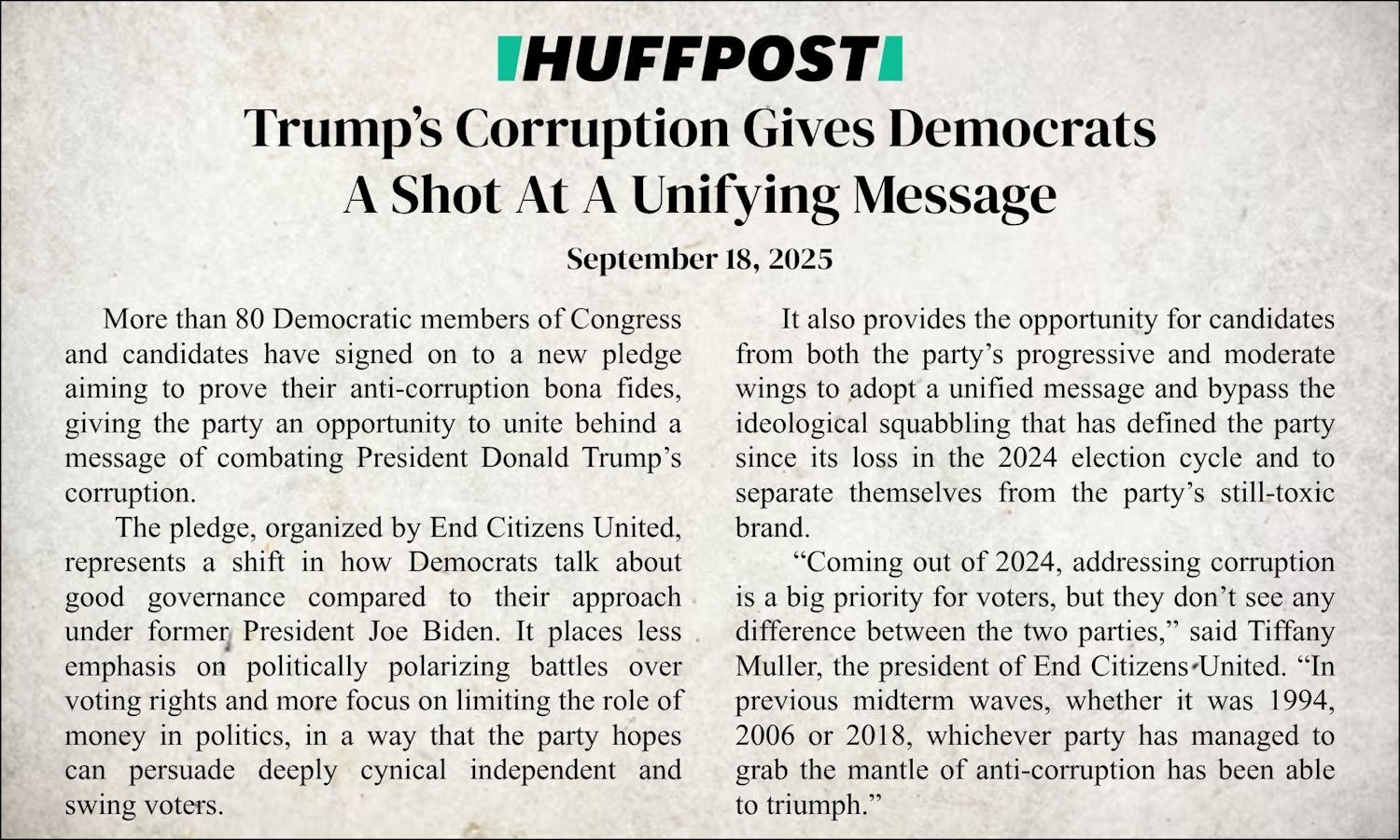
This is not a niche reform effort or a message confined to one faction of the party. Candidates across the Democratic spectrum, from battleground districts to safe seats, and from progressives to moderates, have adopted a common set of anti-corruption policies to position themselves to succeed in November.
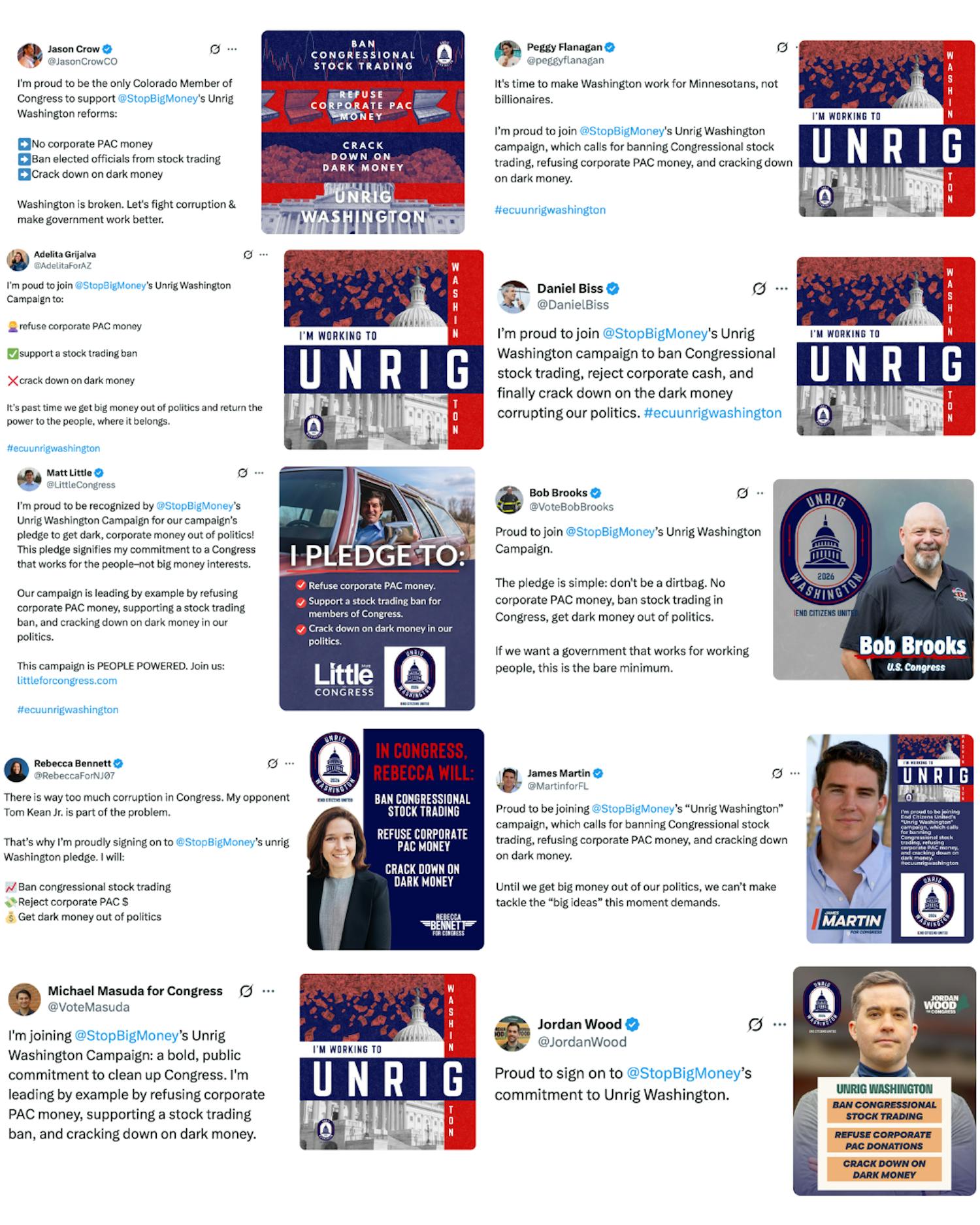
Candidates in the Unrig Washington program commit to: rejecting corporate PAC money, supporting a ban on congressional stock trading, and working to end dark money in politics. These are tested, popular reforms that demonstrate change and independence from special interests, while giving candidates a clear way to show voters they are accountable to everyday people, not major donors.
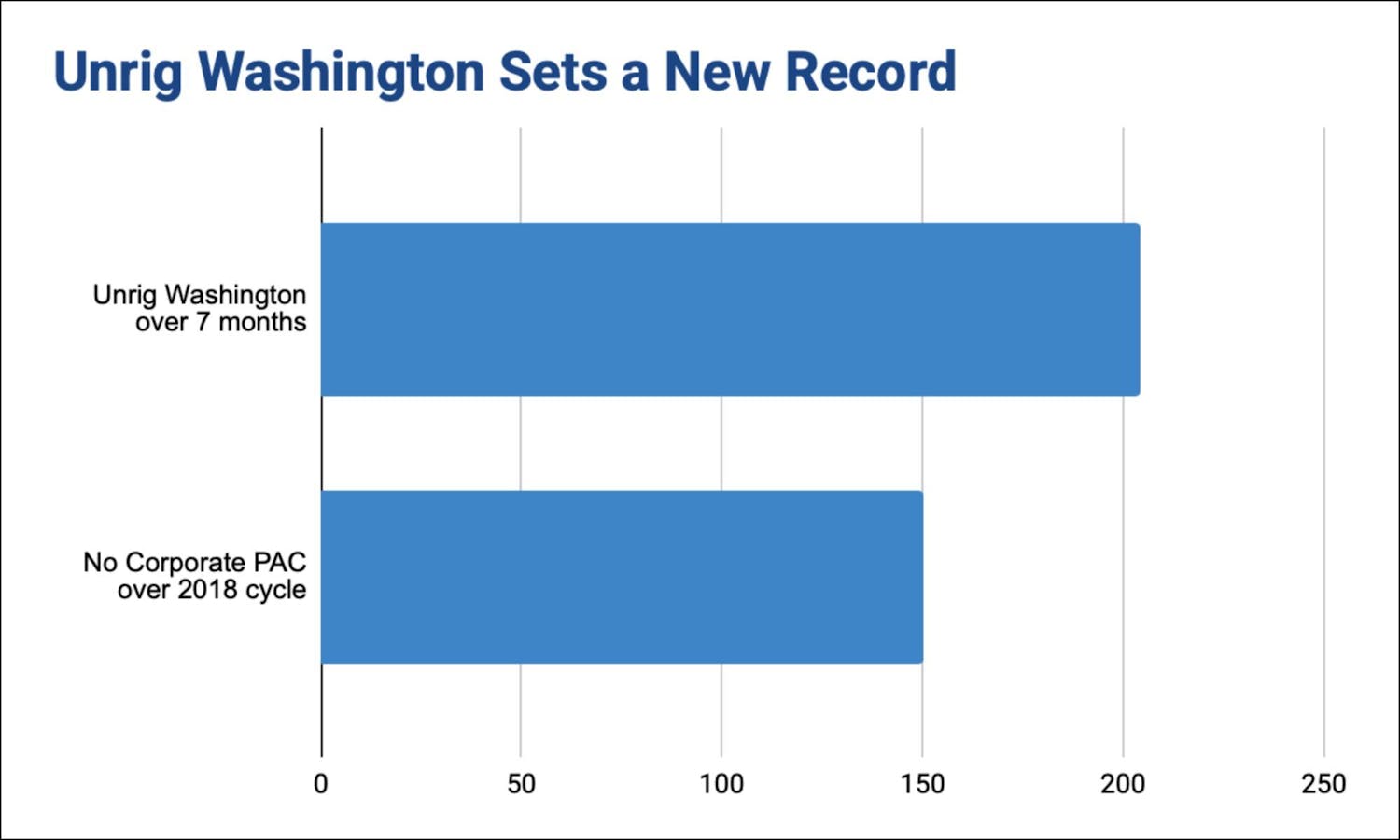
The growth of the program has been rapid and sustained. What started as an idea in late 2025 has quickly become one of the fastest-growing movements of the cycle for either party. In less than seven months, Unrig Washington went from zero to 204 candidates, showing just how quickly Democrats across the party have moved to make anti-corruption central to their case for November. This level of alignment at this pace is truly remarkable when considering the range of issues our country faces.
This is happening in an environment where outside spending is increasing and becoming more visible in elections. As more money flows into races from corporate interests like crypto and AI, voters are asking what candidates are getting in return for the millions being spent on their behalf. We saw this clearly in the Illinois Senate race, where ECU-endorsed Lieutenant Governor Juliana Stratton used the Unrig platform to her advantage to blunt the onslaught of corporate money that came in against her.
It’s clear anti-corruption is no longer a sideline issue. Instead, it’s being used to frame every other issue voters care about, like affordability and health care. At 200+ candidates, Unrig Washington is a core strategy of how Democrats are making their case to voters. And new ECU data proves that these candidates are making the right call electorally.
BUILDING ON THE NO CORPORATE PAC PLEDGE
The Unrig Washington program builds on a foundation that has already been tested at scale.
In 2018, ECU launched the no corporate PAC pledge, which quickly became a defining feature of Democratic campaigns. Three-quarters of top Democratic challengers took the pledge that cycle, turning corporate PAC money into a political liability and putting Republicans on defense for taking it.
That shift mattered because candidates who refused corporate PAC money were able to draw sharper contrasts, build credibility with voters, and elevate corruption as a top issue. The pledge helped establish a baseline expectation within Democratic campaigns and led to 2018 being widely regarded as the year of reform.
Unrig Washington builds on that framework. Instead of a single commitment, it combines multiple anti-corruption measures into a unified platform. Along with being the right thing to do, the policies have been rigorously tested by ECU and consistently perform well with voters in the most competitive districts and states.
The pace and scale of adoption is also significant. It took nearly two years for 150 candidates to take the No Corporate PAC pledge in 2018. Unrig Washington has reached 204 candidates in under seven months. That level of growth, at that speed, is incredibly rare in politics.
With months still to go before the election, 2026 is already on track to surpass 2018 in both scale and prominence of anti-corruption as a campaign issue. The through line is clear: When candidates make clear, verifiable anti-corruption commitments they are better positioned to draw a sharp contrast with their opponents in both primary and general elections.
HOW DEMOCRATS ARE USING UNRIG MESSAGING
Across the country, Unrig Washington is showing up in how candidates campaign, respond to attacks, and connect corruption to the issues voters are dealing with every day.
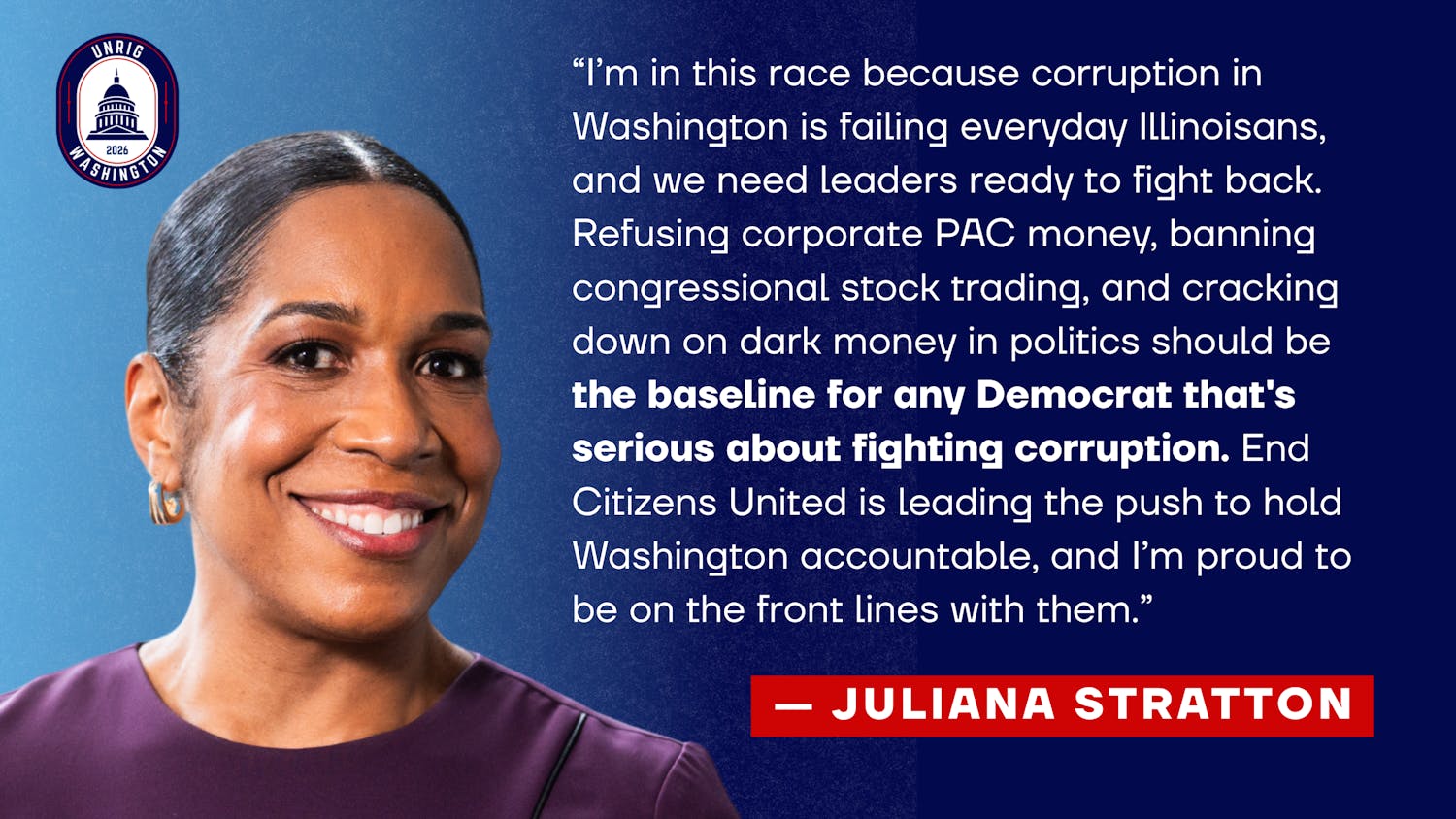
In Illinois, Lt. Gov. Stratton made Unrig Washington the central contrast in the primary. Her refusal to take corporate PAC money defined the race. At every opportunity, whether in paid ads or on the campaign trail, she used this position to differentiate herself and appeal to voters. As outside groups – primarily corporate interests – spent more than $10 million to defeat her, that spending reinforced the argument she was making, turning attacks into proof of the problem she was running to fix.
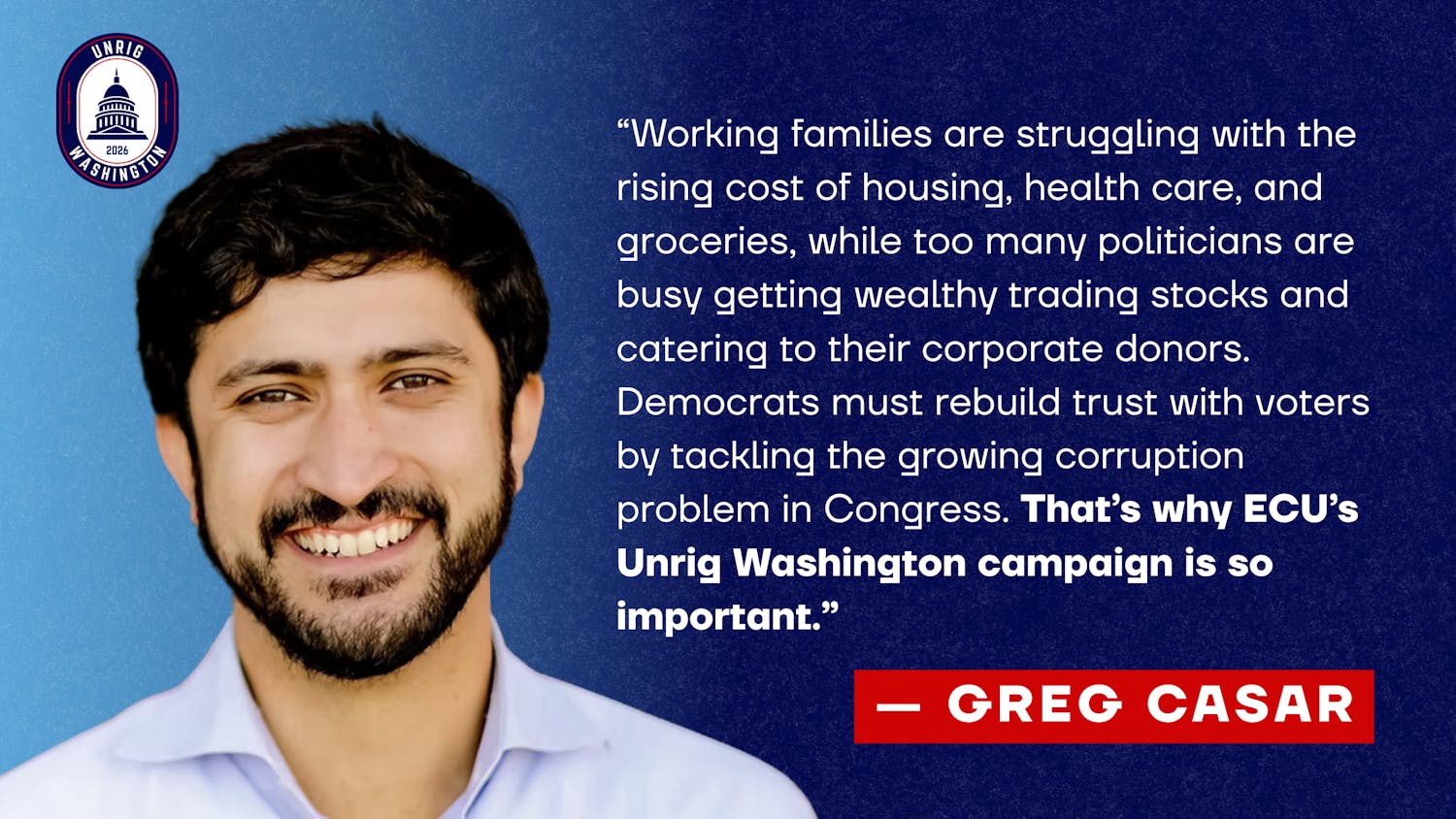
In Texas, Congressman Greg Casar uses Unrig Washington to make a more direct economic case. He ties corruption explicitly to rising costs, arguing that while families struggle with housing, health care, and groceries, politicians are getting wealthy trading stocks and serving their donors. In doing so, he connects money in politics to the day-to-day financial struggles voters are facing.
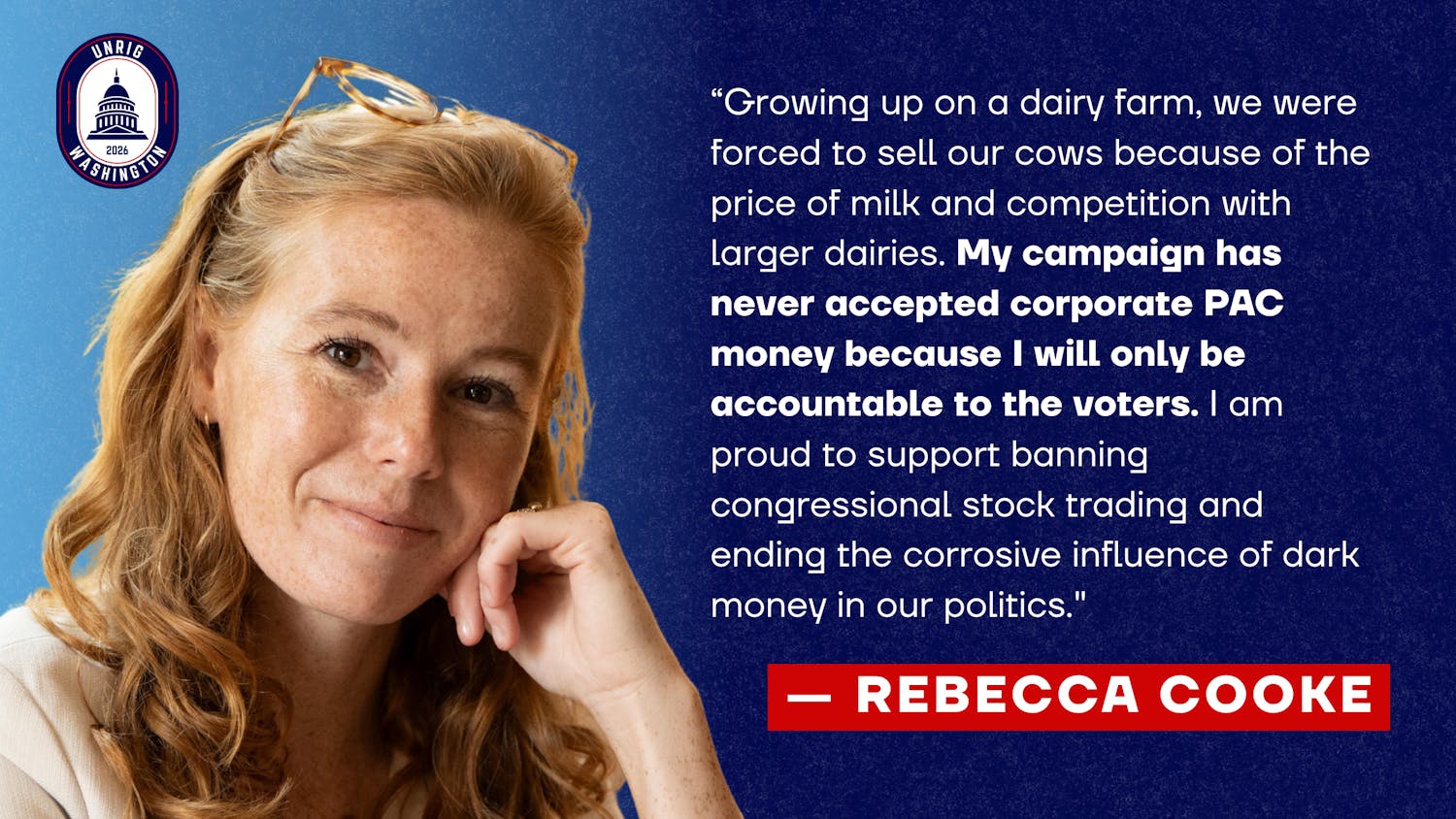
In Wisconsin, Rebecca Cooke grounds the issue at the local level as she tries to flip the 3rd District. She connects corruption in Washington to tangible consequences in her community, from rural hospital closures to economic pressures on family farms. Her refusal to take corporate PAC money reinforces that argument, positioning accountability to voters as a direct contrast with the system she’s criticizing.
What emerges across these campaigns is a consistent theme: Candidates are not treating corruption as a standalone issue. They’re using it to explain why costs are high, why change has been difficult to achieve, and why people are working harder while still falling further behind. Unrig allows them to back up that argument with clear commitments.
ANTI-CORRUPTION IS A WINNING MIDTERM MESSAGE
Democrats are elevating anti-corruption because it is the right policy, but it also happens to reflect what voters already believe. New April 2026 battleground polling commissioned by ECU confirms that corruption is one of voters’ top concerns, alongside threats to democracy and the high cost of living. The ECU polling showed that 42% of battleground voters identify corruption in Washington as one of their top concerns, just ahead of the cost of groceries and gas (40%) and just behind threats to democracy and the voting system (43%).
Just as important, voters do not see corruption as separate from the pressures they face in everyday life. They see it as one of the reasons those pressures exist. In the ECU poll, 74% say corruption affects what they pay for health care and prescription drugs and 65% say corruption affects the amount they pay for groceries and everyday goods. Majorities also say corruption affects housing costs, whether government works for the people, and whether elections are fair.
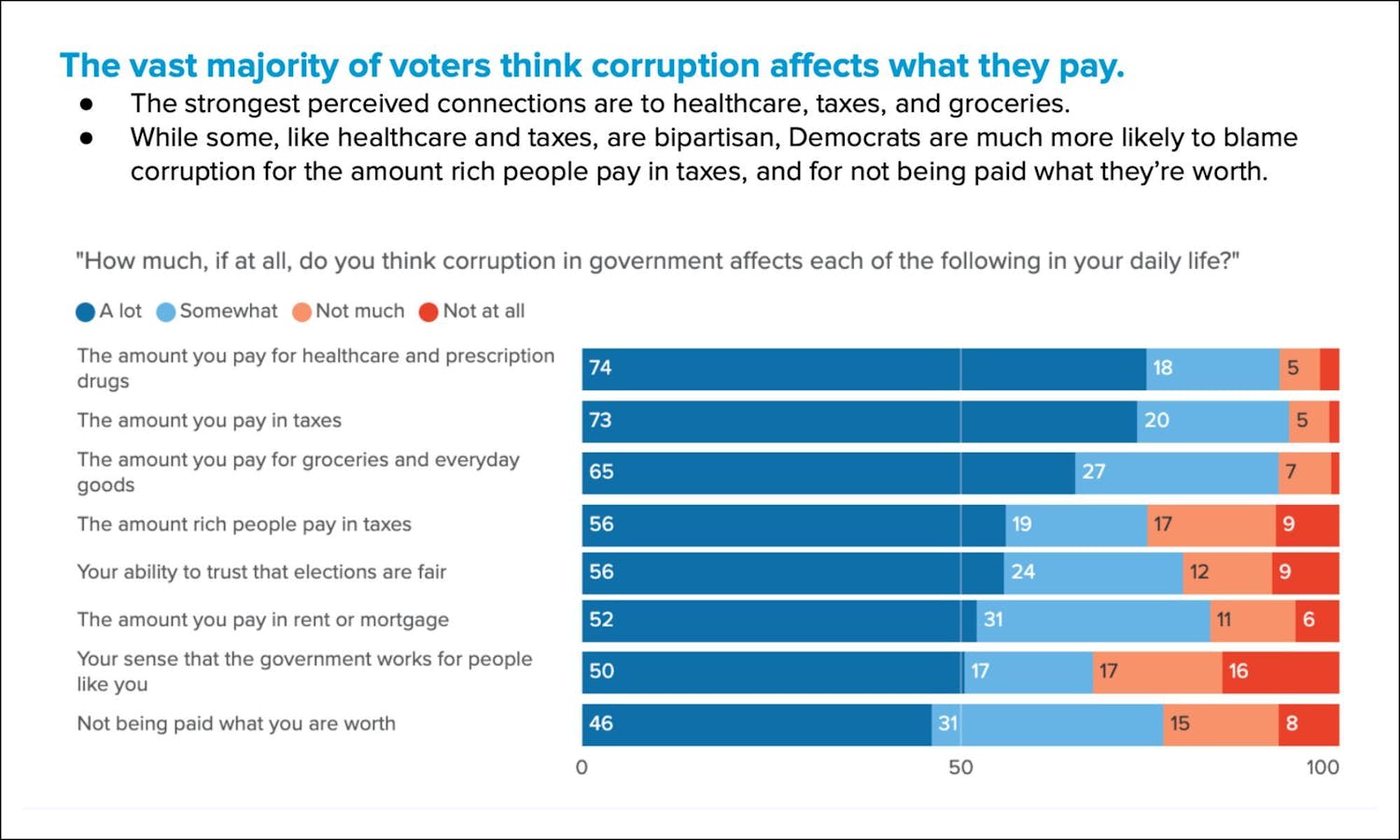
These findings are critical because it means corruption is not competing with affordability. It is one of the clearest ways to talk about why costs are high, why families are getting economically squeezed, and why so many believe the system isn’t working for them.
This creates a major opening for Democratic candidates. At a time when voters are deeply cynical about Washington and increasingly convinced that wealthy donors, corporate interests, and insiders are rigging the system for themselves, Unrig Washington offers a powerful contrast. It gives candidates a way to show voters not only what they oppose but who they are accountable to.
With more than 200 candidates committed to Unrig Washington, it’s clear this is a defining issue in the midterms and will continue to be in elections to come. Democrats have an opportunity to inspire hope and trust in voters this November and win more races, and each day more candidates are seizing that opportunity by joining the Unrig pledge. If Democratic candidates continue to run against corruption, it could create a historically big wave in November.