MEMO
Unrig Washington Dominated 2026 Democratic Primaries
TO: Interested Parties
FROM: End Citizens United
RE: Unrig Washington Dominated 2026 Democratic Primaries
DATE: September 17, 2026
Overview
The 2026 Democratic primaries became the cycle of Unrig Washington. Across the country, corruption emerged as a defining issue as candidates showed voters how a rigged political system drives up costs and prevents government from responding to their needs.
Unrig Washington is End Citizens United’s (ECU) national program for federal candidates committed to fighting corruption in Washington and demonstrating their independence from special interests. Candidates who join make three public commitments: no corporate PAC money, ban congressional stock trading, and help get dark money out of elections.
In under a year, ECU brought together nearly 300 Democratic candidates who made anti-corruption reform a centerpiece of their campaigns. Far outpacing our 2018 No Corporate PAC pledge, Unrig Washington is the largest coalition of elected officials and candidates ECU has ever assembled – and one of the biggest movements in politics this cycle.

Unrig Washington candidates did more than endorse a policy agenda. They used their commitments to establish credibility, distinguish themselves from corporate-funded opponents, turn outside spending into a political liability, and connect corruption directly to the rising cost of living. From major Senate contests to competitive House races, primary voters rewarded candidates who demonstrated that they would challenge the Washington status quo.
As attention turns to November, voters understand that political corruption is making their lives harder, but they still do not trust either party to fix it. That’s why this isn’t just an effective primary message: Unrig Washington gives Democrats an opportunity to close that trust gap with voters. This coalition is a historic opportunity to create a culture change in Washington and bring about the change that we know Americans are demanding.
Unrig Washington Defined the Primary Cycle
When ECU launched Unrig Washington last September, it immediately caught fire. Within seven months, it had already surpassed the number of candidates who had signed onto ECU’s 2018 No Corporate PAC Pledge, which went on to define that election cycle.
By the end of the 2026 primaries, 296 congressional candidates had joined Unrig Washington, including multiple candidates competing in the same races. The coalition spans every type of Democrat: moderate to progressive, longtime incumbents to anti-establishment newcomers, from blue states to red states.
By the numbers:
296 candidates have joined ECU’s Unrig Washington campaign in 2026 - 63 of them are challenging Republican incumbents or running in open seats
32 incumbent Members of Congress are standing with ECU to Unrig Washington
Unrig Washington candidates are running in all kinds of races across the map:
22% are running in battlefield races that will determine the control of Congress
34% are running in safe Democratic races
44% are running in challenging Republican districts, putting together credible campaigns that are expanding the battlefield
Unrig Washington candidates were on the ballot in 180 primary contests, and 142 candidates have advanced to their general election
Now 62.5% of the DCCC Red to Blue challengers, the core of the House Battlefield, are members of Unrig Washington.
In some primaries, Unrig Washington became the standard for the entire Democratic field, generating healthy competition. Consider New Hampshire’s 1st District, where all six candidates in the Democratic primary joined Unrig Washington in quick succession. No matter who advanced, it was going to be someone committed to making Washington work for the voters again.
The program’s growth is even more significant in the context of the 2018 cycle. That cycle, 150 Democratic candidates took ECU’s No Corporate PAC pledge, helping create a lasting culture shift around corporate money in politics –– and leading to the introduction of the For the People Act (H.R. 1).
Unrig Washington doubles that. This year has become an undeniable referendum on government corruption, proven through the decisions of both candidates and voters.

Unrig Candidates Turned Big Money Against Their Opponents
The primaries taught us that rejecting or calling out Big Money is a political advantage. Unrig candidates used their refusal to accept corporate PAC money to establish their independence, contrast themselves with corporate-funded opponents, and raise questions about who those opponents would represent in office.
The cycle’s biggest Senate primaries were won with the Unrig Washington message
13 US Senate nominees are part of Unrig Washington. This includes the candidates in the most competitive battleground states like Iowa, Illinois, Texas, Michigan, Minnesota, Maine, and Georgia. In these races, candidates made the source of their opponents’ money a central contrast and turned corporate and dark money spending into a political liability.
In Illinois, Juliana Stratton won the Democratic nomination despite more than $10 million in spending from AI and crypto, with over two-thirds of ad spending supporting her main opponent. Stratton campaigned hard on accountability, contrasting her Unrig commitment with her opponent’s corporate backing. Despite televisions across the state being flooded with attack ads against her, Stratton bet on the fact that voters could not be so easily swayed. She was right. In fact, they were swayed in the opposite direction — voters are tired of seeing nasty ads coming from corporate and dark money interests. So instead of letting the money intimidate her, Stratton leaned into it.
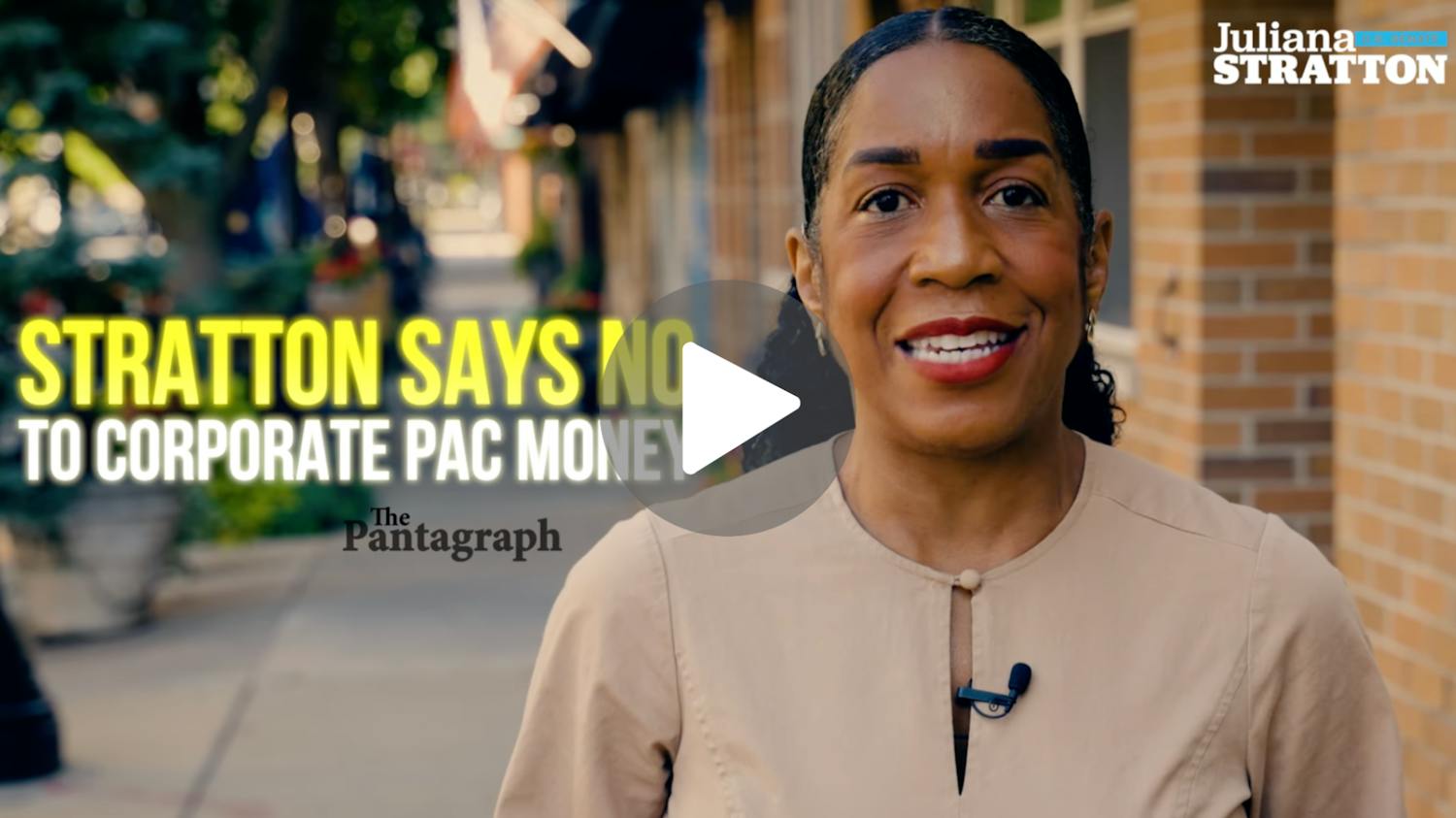
“And for too long, DC politicians have let these corporate overlords go unchecked, looking the other way while pocketing money from these same special interests. Let's call that system what it is, broken. My opponents have taken millions of dollars each from corporate PACs. How are Illinoisans supposed to believe that politicians have their best interest at heart when they're benefiting from this broken system? It's time for that to change. I'm not taking a cent of corporate PAC money in this race because I answer to Illinoisans, not special interests.”
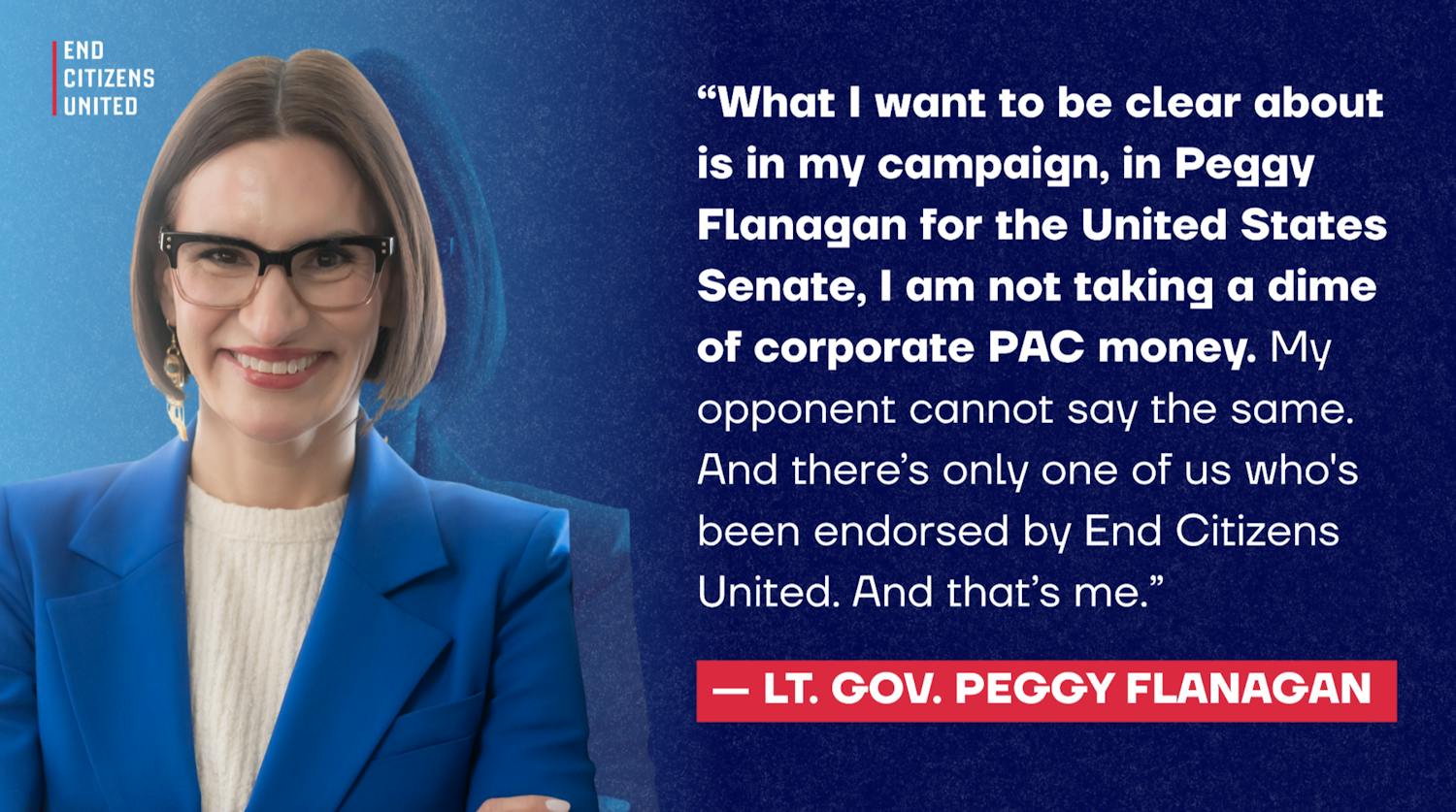
Peggy Flanagan and Abdul El-Sayed deployed similar playbooks in two record-breaking contests. For Flanagan, it was the most expensive primary in Minnesota history. For El-Sayed, his race in Michigan became the most expensive Senate primary ever. Both of them were heavily outspent by their opponents, Flanagan by a nearly 5-1 ratio and El-Sayed by an 11-1 ratio. But voters were again paying attention to the money and the anti-corruption messaging, not the ads that the money bought.
The majority of Red to Blue House candidates commit to Unrig Washington
From California to Ohio, House candidates also seized the chance to show voters they are ready to clean up corruption in DC. With 62% of the DCCC’s Red to Blue candidates on Unrig Washington, it comes as no surprise that corruption emerged as the defining issue in so many of their primaries — and that candidates who rejected big dollars more than made up that ground.
In California, Randy Villegas took up the anti-corruption mantle early on in his primary and signed onto Unrig Washington. That became a key part of his narrative, and his victory became, as CalMatters put it, a "stunning rebuke of establishment politics.” Now that Villegas is running against one of the Most Corrupt Politicians of 2026, Republican David Valadao, he is only leaning further into anti-corruption in the general election.

Needs Repair: “Washington needs repair. In Congress, I'll fix what's broken under the hood: Corrupt politicians rigging the economy while the people who actually do the work pay the price.”
In Pennsylvania, Unrig Washington propelled four pivotal candidates to primary victories: Bob Harvie in PA-01, Chris Rabb in PA-03, Bob Brooks in PA-07, and Paige Cognetti in PA-08. Despite not taking corporate PAC money, they more than made up the difference from their grassroots donors and each ended up leading their primary fields in fundraising. Money in politics became a central issue in each of their campaigns, whether it was about corporate influence or insider trading.
And in Ohio, the Unrig message helped win primaries for Brian Poindexter (OH-07) and Kristina Knickerbocker (OH-10). Each of them drew connections between anti-corruption and their other areas of focus, whether health care reform or worker power. Their message resonated with Ohioans because corruption has made its way into every part of people’s lives.
Brian Poindexter has been a particular champion of the Unrig agenda. He has carried the message of fighting corruption from day one of his campaign into the general election against Rep. Max Miller.

"Corporations and billionaires leave us with scraps. So here's what I'm going to do, no corporate PACs, ban dark money, and no more members of congress trading stocks."
Across these races and so many more, candidates refused to let corporate and dark money dictate the terms of their primaries. They used it to sharpen the contrast against their opponents and strengthen their own claims to independence. The success of that strategy, from major Senate contests to competitive House districts, helped make 2026 the cycle of Unrig Washington.
Unrig Candidates Connected the Affordability Crisis to Corruption
Unrig candidates are not treating corruption as an abstract problem. They connect it directly to the economic pressures voters experience every day. Their argument is that Washington has failed to lower costs — from prescription drugs to housing to food to utilities — because politicians are accountable to their wealthy donors instead of everyday people.
In many cases, the economic cost of corruption is the very message that propels a candidate to victory. The perfect example was Abdul El-Sayed’s primary message, where he connected "money out of politics" to "money in your pocket." In Michigan and across the country, that describes precisely how people understand what is happening in Congress: Politicians sell out to the highest bidder and give free reign to corporations to hike prices. They are ready to see change, and El-Sayed completely owned the message.

Primary Victory Speech: “What we showed is that if you’re willing to build a movement brick by brick, if you’re willing to go and travel your state and have the conversations in rooms big and small, starting in moments where people aren’t even paying attention to an election, but are paying attention to the price of gas and the price of groceries and the price of housing and the price of health care — that you can build a conversation that builds into a movement that defeats Goliath. This is what you all showed. And my hope is that our democracy will never be the same.”
Josh Turek has also repeatedly framed corruption as the driver of high costs. In both the primary and general elections, he has been pitching himself to Iowa voters as a reform-minded alternative to incumbent Ashley Hinson, who has been known for her self-dealing.

Push: “Working families are losing their healthcare because of Trump's Medicaid cuts. And our farmers are hurting from his tariffs. Iowans feel like they're pushing uphill. And I know exactly what that feels like because it's working families like mine paying the price for Trump's war and Washington's corruption.”
Mayor Paige Cognetti has made the cost of corruption a central argument in one of the country’s most competitive House races, arguing that the rigged system in Washington and the rising costs families face in Pennsylvania are inseparable. Her refusal to take corporate PAC money reinforces that message, allowing her to make reform part of her economic case to voters.

Research also backs up the idea that voters recognize the impacts of corruption in their lives. ECU Education Fund polling has repeatedly shown that over 90% of voters consider corruption to be a serious problem, and they link it to affordability. In another ECU poll, 58% of voters identified as direct victims of corruption via devastating health care costs, unfair tax rates, and cuts to government programs like SNAP.
And a new Navigator Research poll released last week confirmed that Americans see corruption and rising costs as directly connected, just as Unrig candidates argued throughout the primaries. Four in five Americans (81%) say corruption in government raises costs, including nearly half (48%) who feel this way strongly. That understanding crosses partisan lines, including 82% of non-MAGA Republicans and 75% of independents, reinforcing the decision by Unrig candidates to make fighting corruption part of their economic message.

Democrats Are Running On Reform
Paid media spending shows how central the anti-corruption message is to Democratic campaigns this cycle. In early August, Bloomberg reported that $87.5 million had been spent on broadcast ads mentioning corporations and corporate PACs, more than double the amount in either the 2022 or 2024 cycles, with 170 ads generating more than 161,000 airings. The scale of that spending shows how firmly questions of corporate influence and political accountability have entered the conversation.

The ad reel below features Democratic campaign ads from across the country focused on corruption, corporate influence, and political reform. Watch the compilation to see how candidates are talking about the issue in their own words.
Voters Want to Know Who Will Fix It
The challenge in the general election is not about finding a winning message — Democrats already have one. The challenge is to establish credibility with the voters. Polling has consistently shown that voters have no idea which party to trust on the issue of cleaning up corruption. Over the past year, numbers have held steady: about one-third of voters trust Democrats, one-third trust Republicans, and one-third trust neither party.
Voters have every reason to be skeptical of Republicans, given their open pattern of pay-to-play politics these past two years and their kowtowing to a president that 69% of Americans view as corrupt. But Democrats cannot take for granted that voters will automatically trust them instead, because voters are clear they don’t. This is exactly the moment for Democrats to proactively seize the anti-corruption mantle and own the message of reform.
The next two months must be about showing voters that Democrats are going to not just replace Republicans, but enact the systemic anti-corruption reforms necessary to bring costs down. Americans are ready to support new leadership, but only if they believe that new leadership will actually act differently once in power.
Unrig Washington Has Already Built the Coalition for November
We do not need to look far to find the Democrats who can energize voters around fighting corruption. Throughout the primary season, End Citizens United identified and elevated candidates who were willing to challenge Big Money and campaign on accountability. Unrig Washington has already built the coalition needed to carry that message into November.
The significance of this coalition goes beyond its size. Unrig Washington candidates have shown how to turn frustration with corruption into a forward-looking argument for change. Voters have seen them reject corporate PAC money, confront outside interests trying to influence their races, and explain what they will do differently in office. They are entering November with credibility earned over the course of the primaries.
There are real tailwinds behind Democrats this year, both structural and cultural, and Unrig candidates have found particular momentum. If anything is clear from the primaries, it’s that the anti-corruption message gives voters a reason to hope. Huge numbers of Democrats showed up during the primaries to support candidates who champion the forward-looking Unrig platform. With the right focus and unity on this issue, we can position ourselves for a big sweep in November.
###